
Chapter two · Early childhood education
From the runway to a new beginning.
I left modelling to challenge myself and explore a world I knew nothing about. I invested my modelling savings in studying early childhood education in Melbourne, Australia, where I spent the next eleven years. I had never held a baby before enrolling, yet I naturally connected with children and built sincere, loving relationships with them and their parents. The experience was as challenging as it was rewarding. I learnt as much as I taught and remain grateful for all that those years gave me.
Three reflections
The change begins with us.
Working with children taught me that no single strategy works every time. I tried different approaches, improvised and found creative ways through everyday challenges. But when nothing seemed to work, I learnt to look beyond a child's behaviour and ask myself: what might it be showing me about myself?
When patience wears thin
We often expect children to be patient and manage their emotions, even when we struggle to do the same. Our ability to remain composed can either ease a difficult moment or make it harder.
Looking beyond behaviour
I began asking myself not only why a child was behaving a certain way, but how I was responding. Was I listening, trying to understand or simply reacting? Children can be unexpected mirrors.
I realised that the behaviour we hope to see in children must also be reflected in our own. When we change the way we respond, we create the space for a different response from them.
Learnings
Five things I learnt from working with children.
01 · Listen to the child.
Take time to understand a child’s feelings, perspective and what they are trying to communicate.
02 · Give their days a rhythm.
Consistent routines provide security and help children develop responsibility. Leave room for outdoor play, nature and animals to nurture curiosity and creativity.
03 · Guide, don’t control.
Give children opportunities to make choices, explore and take on age-appropriate responsibilities. Let them discover what they are capable of.
04 · Be present in their world.
Take an interest in what matters to them. Listen, join in their play and try to see things through their eyes.
05 · Lead by example.
Children learn from what we do more than what we say. They observe how we respond, handle frustration and treat others. And when a child’s behaviour repeatedly triggers us, it may be worth looking at what it brings up in ourselves.
The pictures
Small moments that stay with you.
I haven't included identifiable photographs of the children I worked with. Those moments were theirs to keep. Instead, these images bring together memories from my own childhood and experiences that later shaped me as an educator.
01 · The joy of creating
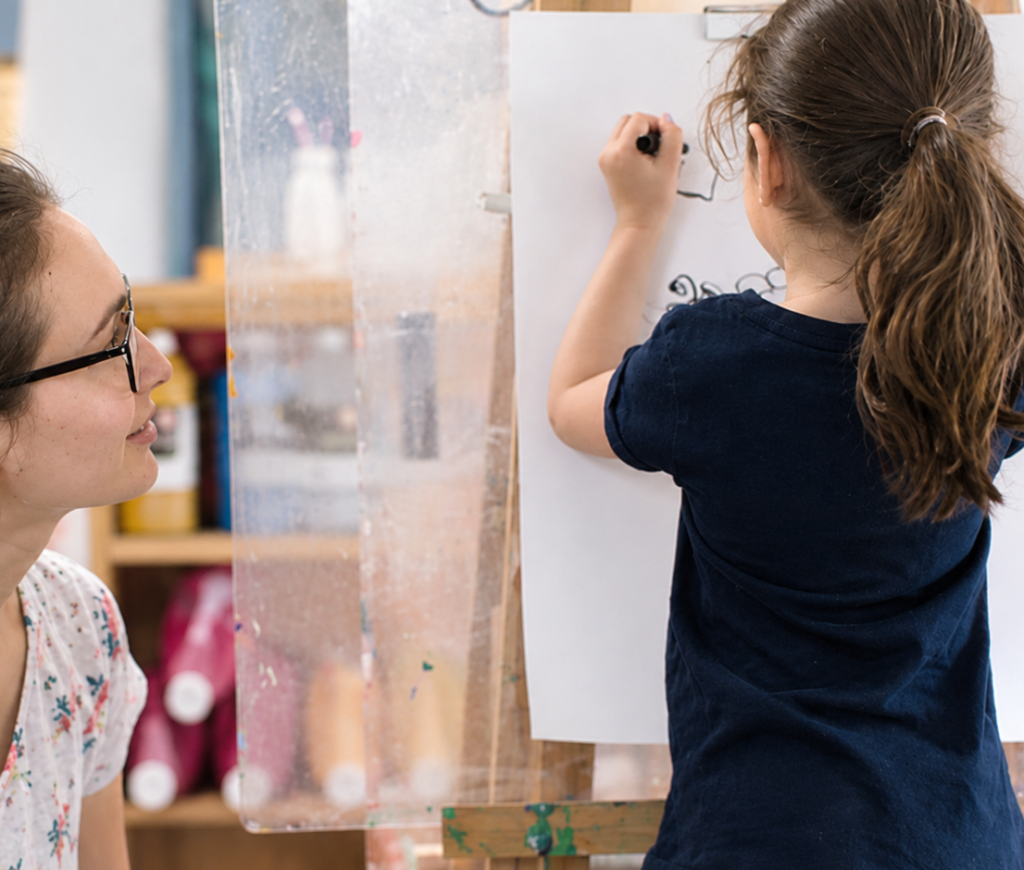
As a child, I loved painting and drawing, often becoming so absorbed that nothing else seemed to exist. Years later, as an educator, watching children create reconnected me with that same joy and my own inner child.
02 · A little house for my kitty
As a child, I once suggested building a little home for my soft toy cat. The other children joined in, collecting sticks, finding roofing materials and gathering grass. Each took a role in bringing the idea to life.
Looking back as an educator, I recognise how initiative and leadership can emerge naturally through play. The way adults respond can either nurture these qualities or discourage them.
03 · Connecting with nature
I remember going outdoors as a child to feed a street dog bread and butter. Our educator encouraged us to approach the animal with care and respect. These simple experiences helped shape my early connection with animals and the natural world.
Consultation · Early Childhood Education & Parent Guidance
Helping children find balance in a changing world.
Raising children today brings challenges around screen use, eating habits, discipline, boundaries and making time for outdoor play. My approach draws on ten years in early childhood education in Melbourne, a decade of international modelling, and my subsequent work in leadership, wellbeing and personal development. Across these fields, I have developed a deeper understanding of discipline, self-management, behaviour and human relationships.
Book a first conversationFirst conversation is free · 30 minutes
- Daily routines: Establish consistency around sleep, meals, learning, play and screen time.
- Healthy habits: Build better eating habits, encourage movement and make time for the outdoors.
- Conscious technology use: Develop mindful screen use and interests beyond digital devices.
- Discipline and responsibility: Foster listening, independence, accountability and respect.
- Play and exploration: Make room for creativity, free play, nature and animals.
- Parent guidance: Understand behaviour, navigate difficult moments and find more constructive ways to respond.
In their words
Said by people who have sat with me.
Words from clients and participants will gather here as they arrive.